


There is nothing quite as maddening as an air conditioner that is clearly switched on — the fan is running, the display shows the right temperature, the outdoor unit is humming — but the house is getting no cooler. In Melbourne, where a run of 38-degree days can arrive without warning, a system that is running but not cooling is not just frustrating. It is a genuine problem that needs resolving fast.
At King & Sons Heating and Cooling, it is one of the most common callouts we receive, especially in January and February. The cause is almost always one of ten things — and a few of them you can check and resolve yourself before calling anyone.
Switch the System Off Now if You Notice Any of These
Do not run the system until a licensed technician has identified the fault if any of the following apply:
- Ice forming on the indoor unit or refrigerant lines
- Water leaking or dripping from the indoor unit
- A burning smell from anywhere in the system
- Grinding or clunking from the outdoor unit
- The outdoor unit is completely silent when the system is switched on
- The system keeps tripping the circuit breaker
Every hour you continue running a system showing these symptoms risks turning a manageable repair into a compressor replacement — the difference between a $400 job and a $2,000 one.
Check These Three Things Before Calling Anyone
Most air conditioning repair callouts for a system not cooling trace back to one of the following. Work through them first — they take five minutes and cost nothing.
1. Check the Remote Mode
If the remote is set to Fan or Dry instead of Cool, the system is moving air but not cooling it. Confirm the display shows the Cool symbol and the target temperature is set below the current room temperature. This is the cause of more emergency callouts than most homeowners expect.
2. Clean the Filter
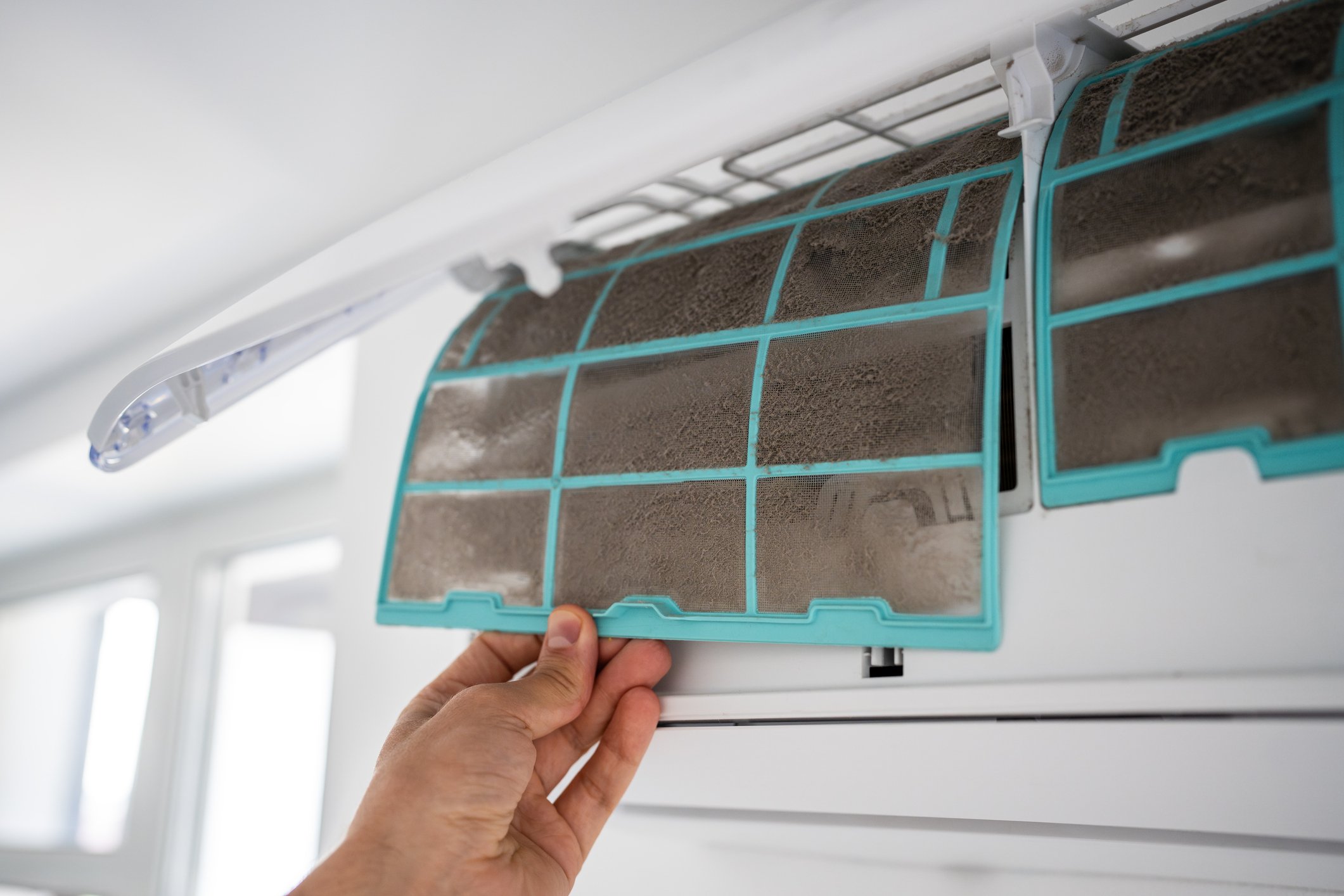
A blocked filter is the single most common reason a split system or ducted air conditioner stops cooling properly. When the filter is clogged, airflow across the evaporator coil drops sharply — less airflow means less heat transfer, which means weaker cooling. In severe cases the coil freezes entirely and cooling stops completely.
Most filters sit behind a panel on the indoor unit. Pull it out and hold it to the light. If you cannot see through it, wash it under running water, allow it to dry fully and refit. During heavy summer use, clean your filter every four to six weeks. If yours has not been touched for months, it is almost certainly contributing to the problem.
3. Check the Outdoor Unit
Go outside and look at the outdoor compressor. Clear at least 600mm of space around all sides — leaves, garden debris, a bin pushed close, or a fence immediately adjacent all restrict the unit’s ability to expel heat. While you are there, confirm the outdoor fan is actually spinning when the system is on. If the unit is humming but the fan is still, that is a mechanical fault that needs a technician.
Still Not Cooling After Those Checks?
If you have worked through the above and the system is still not cooling, the fault is deeper. Call King & Sons on 03 9124 9916 — we carry common parts on our service vehicles and resolve most faults on the day of the callout. We give you a clear quote before starting any work.
The Deeper Causes of an Air Conditioner Not Cooling
1. Refrigerant Leak
Refrigerant carries heat out of your home. A correctly sealed system does not consume refrigerant over time — if the level is low, there is a leak somewhere in the system.
Signs of a refrigerant leak:
- The system runs constantly but barely reduces the room temperature
- Ice forming on the indoor unit or refrigerant lines
- A faint hissing or bubbling sound near the indoor or outdoor unit
- Cooling performance that has gradually worsened over one to two summers
Under Australian regulations, only a licensed refrigeration technician can legally handle refrigerant. It is also illegal to top up the charge without first finding and repairing the leak — the refrigerant will simply escape again. The leak must be located, repaired and the system pressure-tested before regassing.
2. Frozen Evaporator Coil
When the indoor coil freezes over, air cannot exchange heat through it and cooling stops. You may see ice on the indoor unit, or notice water dripping as it thaws. The two most common causes are a severely blocked filter or low refrigerant from a leak.
If you see ice, switch the system off and run Fan-only mode for one to three hours to defrost it — put towels down as the melting ice produces a surprising amount of water. Once defrosted, restart in Cool mode. If the coil freezes again within an hour, call a technician immediately. Running a repeatedly frozen coil risks serious and expensive compressor damage.
3. Blocked Condenser Coil
The condenser coil on the outdoor unit expels the heat removed from inside your home. If it is caked in dirt, cottonwood seeds or grass clippings, heat cannot escape efficiently and cooling drops noticeably. In Melbourne during spring, cottonwood seed buildup on outdoor units is one of the most frequent seasonal causes of reduced cooling. A gentle rinse with a garden hose clears surface debris. A professional coil clean as part of annual servicing prevents it becoming a problem before summer arrives.
4. Faulty Capacitor
The capacitor starts and sustains the compressor and fan motors. When it fails, the outdoor fan may spin slowly or not at all, the unit may hum without the fan running, or the system may start and cut out within minutes. A capacitor fault is one of the most common causes of reduced or absent cooling on systems over five years old. It is a relatively straightforward repair — typically $200 to $400 — but left unaddressed it places extra strain on the compressor and risks a far more expensive failure.
5. Compressor Fault
The compressor drives the refrigeration cycle. When it fails, the system appears to operate — the fan runs, the controls respond — but no cooling occurs because refrigerant cannot circulate properly. Compressor faults typically develop gradually over one to two seasons. If your system is over ten years old and the compressor has failed, ask your technician for an honest assessment of whether repair or replacement represents better long-term value. On an older unit, compressor replacement can approach the cost of a new system.
6. Blocked Drain Line
The indoor unit produces condensation as it cools the air. When the condensate drain line blocks — usually with algae, mould or debris — water backs up. The system may shut down as a safety measure, or water may leak from the indoor unit. A blocked drain is primarily a maintenance issue and a technician clears it quickly. Annual servicing includes a drain inspection as standard.
7. Faulty Thermostat or Control Board
If the thermostat misreads the room temperature, the system may cut back output thinking it has reached the target — even while the room remains warm. A faulty control board can produce erratic behaviour or failure to maintain cooling despite the system appearing to run normally. These faults require diagnostic equipment to identify and are not something you can spot visually.
8. Duct Leaks (Ducted Systems)
If your ducted air conditioning system cools some rooms well but leaves others warm, conditioned air may be escaping through separated duct joints, degraded insulation or pest-damaged sections in the roof cavity. Duct leaks cannot be diagnosed from below the ceiling — a technician needs roof space access to inspect each duct run. A partial re-duct often restores even cooling across the home.
9. System Too Small for the Space
If your air conditioner has never comfortably kept up on Melbourne’s hottest days and this has been the case since installation, the system may simply be undersized — not a fault that can be repaired. Changes to the home since installation can also make a previously adequate system insufficient: an extension, removed insulation, new skylights or an enclosed area added to the conditioned floor plan. An on-site assessment confirms whether sizing is the issue and what a correctly specified replacement system would cost.
10. Age and General Deterioration
A system 15 or more years old may be reaching the end of its serviceable life. Components wear, efficiency drops and the cost of ongoing repairs begins to outweigh the value of keeping it running. If your system has had multiple repairs in recent seasons, ask for an honest assessment of whether continued repair or replacement is the better decision.
Repair or Replace?
| Situation | Recommendation |
|---|---|
| System under 8 years old, single fault | Repair |
| System 8-12 years old, minor fault (capacitor, coil clean) | Repair |
| System 8-12 years old, major fault (compressor, PCB) | Get a replacement quote before committing to repair |
| System over 12 years old, any significant fault | Strongly consider replacement |
| System any age, recurring faults every season | Replacement is likely better long-term value |
What Do Repairs Typically Cost?
Your technician will provide a quote before starting any work. These are approximate Melbourne-market figures.
| Fault | Approximate Cost |
|---|---|
| Filter clean / basic service | $150 – $250 |
| Capacitor replacement | $200 – $400 |
| Refrigerant leak repair and regas | $400 – $800 |
| Coil cleaning (indoor or outdoor) | $200 – $350 |
| Drain line clear | $100 – $200 |
| PCB / control board replacement | $400 – $700 |
| Compressor replacement | $1,200 – $2,500+ |
Why Choose King & Sons?
As licensed Melbourne HVAC technicians, we have seen every type of cooling fault — from a clogged filter on a two-year-old unit to a failed compressor on a 20-year-old system. Here is how we work:
- Clear quotes before we start: No surprises on the invoice
- Parts on the vehicle: We carry common components so most faults are resolved on the first visit
- All major brands serviced: Daikin, Mitsubishi Electric, Fujitsu, Panasonic, LG, Samsung, Brivis, Bonaire and more
- Licensed and insured: ARCtick certified for refrigerant handling, VBA licensed for all electrical work
Frequently Asked Questions
Need Assistance?
King & Sons are licensed air conditioning technicians servicing all major brands across Melbourne. $0 call-out fee · Same-day service · 100% workmanship guarantee. Call 03 9124 9916 or book a service online.